
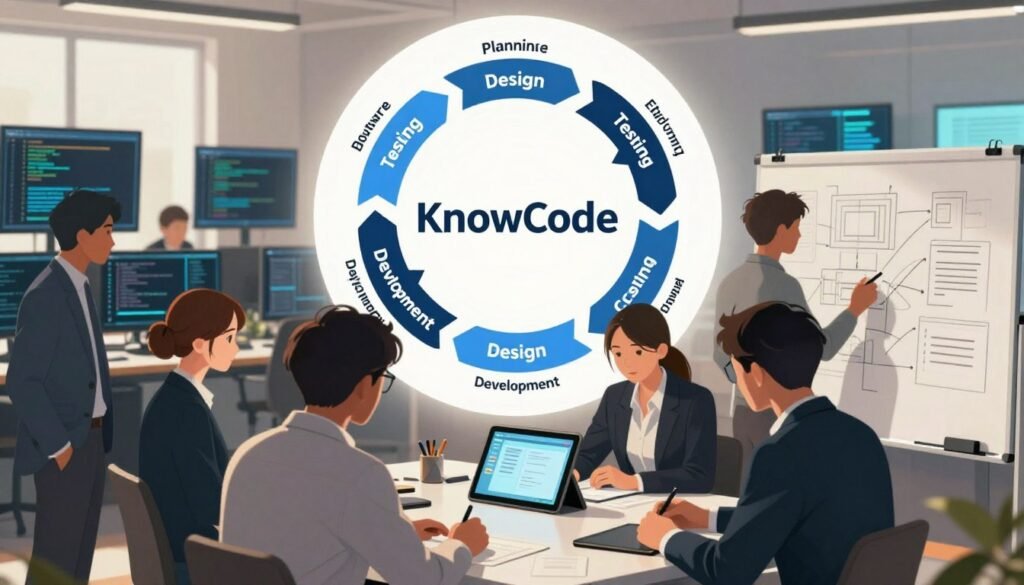
The Software Development Lifecycle, Explained Simply
Most failed software projects don’t fail because the idea was bad — they fail because nobody mapped out how to get from idea to working product. Roughly 70% of digital projects miss their mark, and weak planning is usually at the root of it. A clear software development lifecycle approach is what separates a project that ships on time from one that quietly stalls out. Working through a proven software development process lets us plan, build, and release something reliable, rather than improvising as we go. That structure cuts down on confusion and the expensive mistakes that come from skipping steps. It also puts better decisions within reach at every stage of the build. We believe clarity is what success is actually built on. Whether you’re launching something brand new or reworking an existing product, our team is here to walk through these stages with you. We’ll help you navigate the complexity with real confidence, not guesswork. Need help with your next project? Call (404) 984-2226 or email business@knowcode.us. We’re ready to help turn your vision into something real and dependable. Key Takeaways Structured planning meaningfully raises the success rate of digital projects. A defined workflow helps teams sidestep common pitfalls and budget overruns. Clear communication at every phase keeps the final product aligned with what users actually need. Expert guidance simplifies complex technical decisions for your business. Ongoing monitoring allows for faster fixes and stronger long-term performance. Software Development Lifecycle Explained: How the Process Works Turning an idea into a working application is a genuinely detailed process, not a single leap from concept to launch. We think of it as a sequence of stages that carries software from a rough idea all the way through to something people actually use. Following these stages of software development keeps a project on track and aimed at its actual goals. What the Software Development Lifecycle Means The lifecycle is a structured framework for building digital products. It splits a project into distinct SDLC phases, each one checking on requirements, quality, and delivery in turn. Those checkpoints are what let us track real progress and catch problems while they’re still small. Why a Defined Development Process Matters A consistent process is what keeps quality from slipping as a project grows. Without a plan in place, projects tend to drift off course fast. We rely on these methods specifically to test and verify each feature before it ships. Benefit Impact on Project Outcome Risk Mitigation Early detection of bugs Higher stability Clear Communication Aligned expectations Reduced rework Quality Assurance Rigorous testing cycles Reliable software How Teams, Stakeholders, and Users Contribute Building genuinely great software is a team effort — technical staff, business stakeholders, and real user feedback all play a part. We lean on a collaborative approach specifically to make sure the end product solves an actual problem, not a hypothetical one. Need help with your project? Call (404) 984-2226 or email business@knowcode.us. We offer expert guidance on strengthening your development workflow. The Core Stages of Software Development We break our work into clear phases to turn complex ideas into real, usable applications. Sticking to a tested software development methodology is what keeps a project on track and held to a genuinely high standard throughout. Planning and Requirements Gathering Define the Problem, Goals, Scope, and Success Measures We start by clearly defining the problem we’re actually trying to solve. Specific goals and a firm scope help avoid the slow creep that derails so many projects. Success gets measured against concrete metrics tied directly to business goals, not vague intentions. Identify User Needs, Risks, Budget, and Timeline Understanding the end user is genuinely central to getting this right. We identify risk early and build out a realistic budget and timeline from the start. That transparency keeps everyone — client and team alike — on the same page throughout. Designing the Software Solution Create the Technical Architecture and User Experience Our team builds a genuinely strong technical foundation designed for growth, not just the immediate release. We prioritize a user experience that keeps the application both powerful and easy to actually use. Choose Appropriate Tools, Platforms, and Integrations Selecting the right tech stack matters enormously here. We weigh different platforms and integrations carefully to make sure everything connects smoothly, without awkward workarounds bolted on later. Development and Code Implementation Build Features in Manageable Components We frequently rely on an agile development process to break large projects into smaller, manageable pieces. That approach speeds up delivery and creates far more opportunities for real feedback along the way. Use Version Control, Code Reviews, and Documentation Keeping code quality high requires disciplined version control paired with genuine peer review. We document every step thoroughly, both for clarity now and for maintainability down the road. Testing for Quality and Security Perform Functional, Performance, Usability, and Security Testing Quality isn’t negotiable in our process. We apply a range of software testing techniques — functional, performance, usability, and security — to catch and resolve issues well before users ever encounter them. Track Defects and Verify Fixes Before Release Every defect gets tracked in a central system, not scattered across notes and memory. We confirm each fix genuinely works and doesn’t quietly introduce a new problem elsewhere. Deployment and Release Management Move the Application Safely Into Production Moving an application into production takes real care and planning. We follow strict protocols specifically to minimize downtime and keep the experience smooth for the people actually using it. Use Staged Releases, Backups, and Rollback Plans Staged releases are how we keep risk manageable during launch. Detailed backups and clear rollback plans stay in place in case something unexpected comes up mid-release. Maintenance and Continuous Improvement Monitor Performance, Reliability, and User Feedback Our work doesn’t end at launch — that’s really just the beginning of the next phase. We keep a close eye on system performance and stay genuinely responsive to user feedback, looking for real opportunities to improve. Deliver Updates, Fixes, and New Capabilities
The Software Development Lifecycle, Explained Simply Read More »