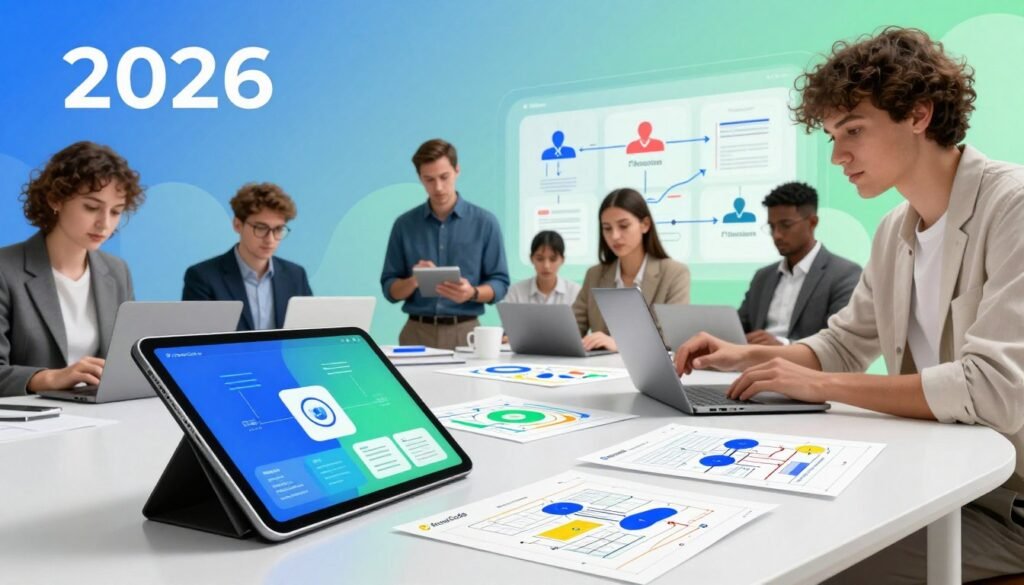
UX Design Trends 2026 What to Expect in User Experience
Here’s a stat that should make any product team nervous: over 70% of digital product failures trace back to one thing — teams ignoring what users actually expect. Not a lack of features. Not bad tech. Just a mismatch between what was built and what people needed. That’s why staying ahead of ux design trends 2026 isn’t optional anymore, especially for teams building modern interfaces here in the United States. Right now, we’re watching artificial intelligence, multimodal interaction, and immersive environments reshape the field at the same time. That’s a lot of change at once, and it comes with real tradeoffs — mainly around privacy and making sure nobody gets left behind on accessibility. This guide walks through how these ux trends are already changing how digital services get built. We’ll cover research, prototyping, and the part everyone skips: actually putting it into practice. Need a hand with your next project? Call us at (404) 984-2226, or email business@knowcode.us, and let’s talk through your goals. Key Takeaways Artificial intelligence is reshaping how people interact with digital interfaces. Multimodal and immersive environments have moved from novelty to necessity for modern products. Prioritizing accessibility and data privacy is how you earn audience trust — not a nice-to-have. Flexible systems let teams adapt quickly when the market shifts. Solid research and prototyping remain the foundation everything else is built on. UX Design Trends 2026 Shaping Digital Products A handful of ux design trends 2026 are going to define how we use technology over the next few years. The shift we’re seeing is from systems that simply react to systems that anticipate. These emerging design trends are really about closing the gap between what people want and what the technology in front of them can actually do. Adaptive Experiences Powered by Artificial Intelligence Personalized interfaces, predictive actions, and responsible automation Artificial intelligence has moved from “interesting add-on” to a central player in how we interact with digital products. Machine learning now shapes interfaces around actual usage patterns, so every interaction starts to feel tailored rather than generic. Systems are getting better at anticipating what a user wants to do next. But there’s a catch — that kind of automation only works if people trust it. If you’re navigating these changes, call (404) 984-2226 or email business@knowcode.us. Multimodal Interfaces Beyond the Traditional Screen Voice, gesture, conversational, and visual interaction patterns Tapping a screen is no longer the whole story. Voice commands, gesture recognition, and visual input are becoming standard ways people expect to interact with devices — and honestly, it makes the whole experience feel a lot more natural, less like operating a machine. Spatial and Immersive User Experience Design Augmented reality, virtual reality, and three-dimensional navigation Spatial computing is redrawing how digital spaces look and feel. Augmented and virtual reality add real depth and presence to interfaces. These design trends for 2026 demand entirely new navigation models — we’re talking a move away from flat menus toward genuine three-dimensional interaction. Interaction Type Primary Benefit Implementation Complexity Voice/Conversational Hands-free convenience Moderate Gesture Control Natural engagement High Spatial/AR Immersive context Very High Accessible and Inclusive Design as a Product Standard Designing for different abilities, devices, languages, and contexts Accessibility isn’t a checkbox you tick at the end — it’s core to good design, full stop. It’s digital equality, plain and simple. We design for different abilities, devices, and languages from day one, not as an afterthought bolted on later. Following these emerging design trends means building products that actually work for everyone. These user interface trends are also just good business — they build loyalty and widen your reach. Want help applying them to your project? Call (404) 984-2226 or email business@knowcode.us. How We Can Apply Emerging UX Trends to Real Projects Real innovation in UX design comes from solving actual problems — not chasing whatever’s trending this quarter. Making the future of ux design tangible means keeping products useful, not just new for the sake of new. Researching User Needs Before Adopting New Technology Combining usability testing, behavioral data, interviews, and accessibility reviews Before we bring in a new tool, we test whether it actually helps. Usability testing and behavioral data tell us if a feature earns its place. Interviews fill in the rest — what users say they need versus what the data shows. We also make sure new technology trends in ux work across the board, not just for the easiest segment of users. That means checking accessibility at every step, not retrofitting it later. “Design is not just what it looks like and feels like. Design is how it works.” Steve Jobs Building Trust Through Privacy-Centered Experiences Clear permissions, explainable AI decisions, and transparent data practices Trust is the foundation of good user experience design — lose it, and nothing else matters much. We give users real control over their data through clear, understandable permissions. When AI is making suggestions, we make sure people understand why they’re seeing what they’re seeing. That transparency is what actually builds loyalty over time. Creating Consistent Experiences with Flexible Design Systems Reusable components, adaptive layouts, and scalable content patterns Consistency is what makes complex systems manageable. We build with reusable components and layouts that hold up across devices, so the experience doesn’t fall apart the moment someone switches from desktop to mobile. Scalable content patterns keep the brand voice intact while still leaving room to grow. It’s a practical approach — it sidesteps a lot of technical debt down the line and keeps our teams efficient. Balancing Innovation with Familiar User Interface Trends Using progressive disclosure, clear feedback, and recognizable interaction models We’re not chasing every new UX trend just because it’s new — we still respect what users already know how to do. Progressive disclosure helps us introduce complexity gradually instead of dumping it all on someone at once. Clear feedback and familiar interaction patterns keep people comfortable, even when we’re introducing something unfamiliar underneath. Here’s roughly how we think about that balance: Strategy
UX Design Trends 2026 What to Expect in User Experience Read More »