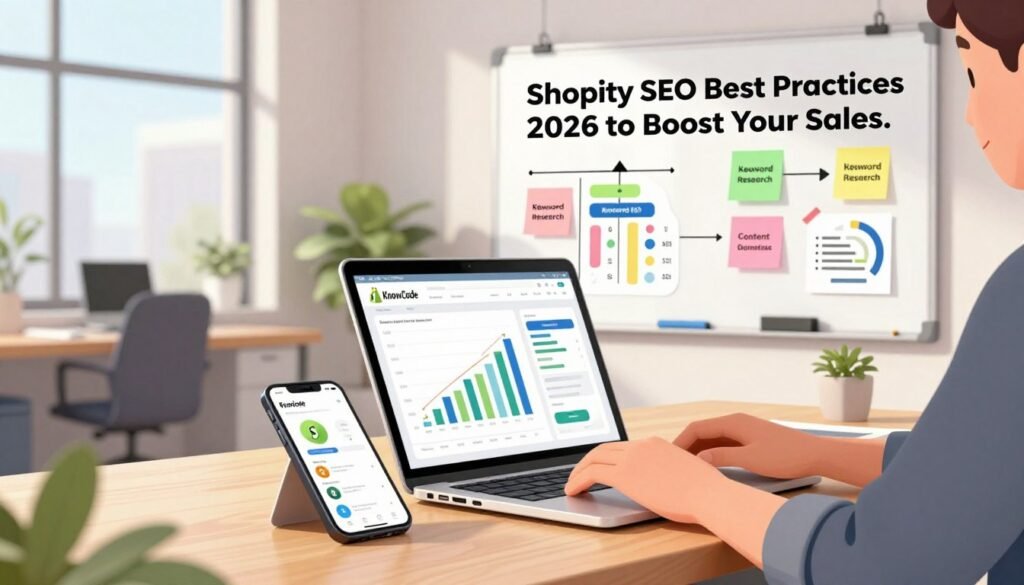
Over 90% of online shoppers never look past the first page of search results. Read that twice — if your store is buried on page two, you’re leaving real money on the table every single day. That’s exactly why shopify seo best practices 2026 aren’t optional anymore; they’re the baseline for staying visible in a crowded market.
We believe a strong ecommerce seo plan fundamentally changes how people discover your products. Tightening up technical details, targeting the right keywords, and publishing genuinely useful content — together, that combination is what drives traffic and sales upward. It’s one piece of the broader Digital Marketing Strategies and E-commerce Optimization work that actually moves the needle for a growing store. Our team walks with you through every stage of that growth.
Feeling a little lost in the world of search algorithms? You don’t have to sort it out alone. We’re here to make your store more visible. Call (404) 984-2226 or email business@knowcode.us to talk through your goals.
Key Takeaways
- Prioritize technical site health so search engines can crawl your pages efficiently.
- Target high-intent keywords that match what your customers are actually typing into search.
- Create content that solves real user problems and builds genuine brand authority.
- Measure performance consistently, and let real data — not guesswork — refine your strategy.
- Contact our experts at (404) 984-2226 for professional guidance on your growth strategy.
Shopify SEO Best Practices 2026: Build a Search-Friendly Store
Successful online store optimization starts with checking your site’s technical health — not with writing content. Before a single blog post goes live, make sure search engines can actually find and index your pages. Without that solid technical base, everything built on top of it is shakier than it needs to be.
Audit Shopify Technical SEO Before Optimizing Content
A technical audit is what surfaces the barriers standing between your store and better rankings. Check your robots.txt file and sitemap carefully. Make sure canonical tags are doing their job to avoid duplicate content issues. Consistency across the board is what keeps your indexation status healthy.
“Technical SEO is not just about fixing errors; it is about creating a seamless path for search engine bots to understand the value of your products.”
Improve Shopify Site Speed, Mobile Usability, and Core Web Vitals
Shoppers expect fast load times, mobile included — patience for a slow site is basically zero these days. Google leans on Core Web Vitals as a ranking signal, so compressing images and choosing efficient themes both go a long way.
| Metric | Goal | Impact |
|---|---|---|
| LCP | Under 2.5s | High |
| INP | Under 200ms | Medium |
| CLS | Under 0.1 | High |
Create a Clear Store Structure With Collections, Products, and Internal Links
A logical site hierarchy helps both users and search engines find their way around. Group products into sensible collections and use descriptive URLs throughout. Strong internal links do double duty here — they build page authority while making everything easier to discover.
Configure Shopify Search Engine Optimization Settings
Shopify has built-in tools that cover the basics of online store optimization. Customize your store title, meta descriptions, and image alt text through those settings. Want expert eyes on it? Call (404) 984-2226 or email business@knowcode.us.
Apply On-Page SEO Strategies for Shopify Product and Collection Pages
Real ecommerce growth tends to come from small, precise changes made consistently across every product and collection page — not one big overhaul. Focusing on what search engines actually reward is what makes your store more visible over time. These seo tips for Shopify websites are built to bring in more customers and, ultimately, more sales.
Research Commercial Keywords for Shopify Products and Collections
Commercial keywords signal buying intent — someone typing these terms is ready to purchase, not just browsing. Tools like Google Keyword Planner or Ahrefs help surface them. Words like “buy,” “best,” or “deals” show up often in this category. Targeting them means you’re attracting people who are actually serious about buying, not just window shopping.
Write Search-Optimized Titles, Meta Descriptions, and URL Handles
Your page title and meta description are your first shot at grabbing a shopper’s attention in the search results. Keep titles under 60 characters and meta descriptions under 160 — anything longer just gets cut off anyway. Clean, descriptive URL handles built around your main keyword make it easier for search engines to understand what the page is about.
Optimize Product Descriptions, Images, Alt Text, and Structured Data
Unique product descriptions are what help you stand out from every other store selling the same item. Skip copying the manufacturer’s text word-for-word — that’s a fast track to duplicate content problems. Every image needs solid alt text, and structured data should be in place to surface your product details clearly.
Publish Helpful Content That Supports Ecommerce SEO and Buyer Intent
Good Shopify search engine optimization goes well beyond listing products on a page. Blog posts and guides that actually answer customer questions build trust — and they show search engines (and shoppers) that you genuinely understand your audience’s needs.
Strengthen Internal Linking and Avoid Duplicate Content
Internal links help search engines navigate your site while keeping shoppers engaged longer. Linking related products directly in your descriptions encourages people to browse further instead of bouncing. Canonical tags matter here too, since they head off duplicate content issues caused by product variants or filtered category pages.
Measure Results and Improve Shopify SEO With Search Console and Analytics
Tracking progress is what turns effort into actual results. Google Search Console shows you site health and flags indexing errors before they become bigger problems. Pair that with Google Analytics to see which pages are actually driving revenue, then adjust your strategy based on what the data shows — not on hunches.
| SEO Element | Primary Goal | Best Practice |
|---|---|---|
| Meta Titles | Click-Through Rate | Include primary keyword |
| Alt Text | Accessibility & SEO | Describe the image clearly |
| URL Handles | User Experience | Keep it short and readable |
| Structured Data | Rich Snippets | Use JSON-LD format |
Get Professional Online Store Optimization Help From KnowCode
Juggling both the technical and creative sides of your store can get overwhelming fast. If you’re ready to grow and want a partner in it, our team is here. Call (404) 984-2226 or email business@knowcode.us to talk through how we can help.
Conclusion
Long-term success comes down to two things: solid technical fundamentals and genuinely good content. Think of your store as something living — it grows and shifts alongside search trends, not despite them. That mindset is what keeps you ahead of the curve.
Real growth shows up in organic traffic, conversion rates, and total revenue — those numbers tell a far more honest story than rankings alone ever could. Keep updating your store as user habits shift, because what worked last year won’t automatically work this year.
Staying attentive is what lets you adjust as new market needs emerge. Sharpening both your technical setup and your messaging together is how you keep your competitive edge from dulling.
Our team at KnowCode knows how to navigate these digital challenges. We build strategies for brands that genuinely work, grounded in SEO best practices rather than shortcuts. Call (404) 984-2226 or email business@knowcode.us to talk through your goals.
FAQ
Why are shopify seo best practices 2026 essential for my brand’s growth?
How can we effectively improve shopify seo regarding site performance?
What are the most effective seo strategies for Shopify store structure?
Can you provide specific seo tips for Shopify websites to enhance product visibility?
What are the current seo trends for Shopify that we should prioritize?
How do we measure the success of our Shopify search engine optimization efforts?
Ready to experience the difference? Click here: KnowCode – A Unit of DigitalSquad LLC.