Businesses running on modern digital infrastructure consistently outperform those still tied to older, all-in-one platforms — and conversion rates tell a big part of that story. Standing still on outdated architecture is one of the surest ways to fall behind, which is exactly what pushes more brands to explore headless commerce.
So what is headless commerce, really? At its core, it’s the separation of your website’s front end from its back-end data. That split lets developers change how a site looks and feels without ever touching the underlying database.
Consider this headless commerce explained for beginners — a walkthrough of the technology behind API-first e-commerce and how it enables fast, distinctive shopping experiences across any device. Not sure if it’s the right move for your business? Call (404) 984-2226 or email business@knowcode.us for guidance.
Key Takeaways
- Decoupling separates the user-facing interface from the back-end database.
- API-driven systems enable faster updates and stronger overall site performance.
- Businesses gain far more control over the customer experience across every device.
- This architecture supports rapid scaling during high-traffic periods.
- Professional guidance makes for a smoother transition to this model.
Headless Commerce Explained For Beginners: What It Means and How It Works
Understanding modern digital storefronts starts with separating the front end from the back end. Moving away from a single all-in-one platform is what allows this kind of rapid innovation — and what lets a business respond quickly to changing customer needs.
What Is Headless Commerce?
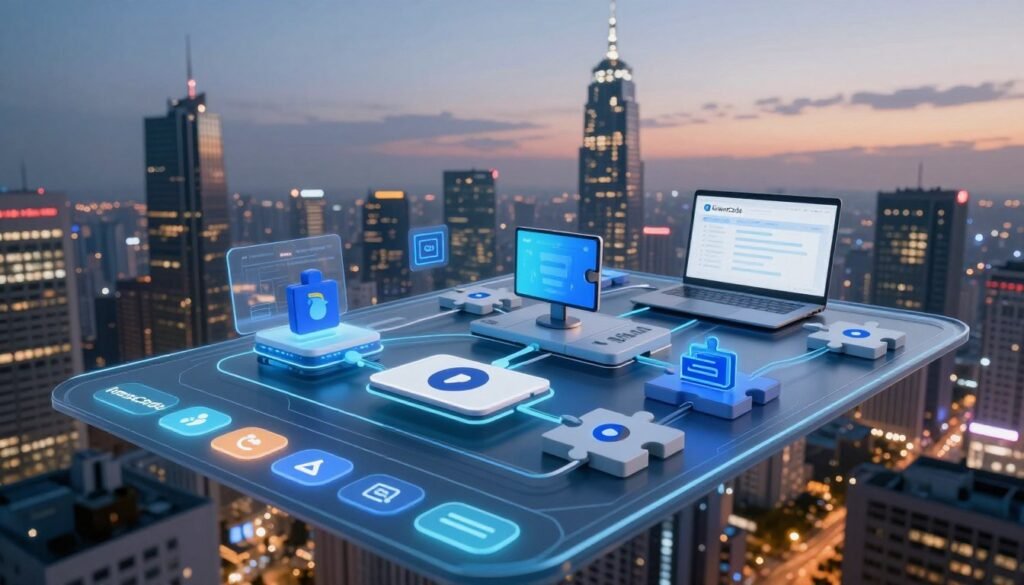
Headless commerce separates a website’s front end from its back-end engine entirely. Unlike a traditional bundled setup, these two layers operate independently, which makes updates noticeably faster and less risky.
With that separation in place, a site’s look and feel can change without touching inventory data or the underlying database — flexibility that matters most for brands actively scaling.
How the Front End and Back End Work Independently
The front end serves as the presentation layer, while the back end handles the infrastructure behind it. The two communicate exclusively through APIs.
“The future of digital retail is not about choosing a single platform, but about creating a flexible ecosystem that adapts to the user.”
Because the front end isn’t tied to a specific platform, developers can choose any front-end framework they prefer, opening the door to a genuinely custom experience rather than one boxed in by standard templates.
Core Components of a Headless Commerce Architecture
A solid headless commerce architecture needs a few key parts. These parts work together to ensure data flows smoothly across all touchpoints.
Commerce API, Headless CMS, and Presentation Layer
A functional headless commerce architecture depends on a handful of core pieces working together to keep data flowing cleanly across every touchpoint.
- Commerce API — the bridge connecting all data exchanges between systems
- Headless CMS — a centralized hub for managing content independent of the commerce engine
- Presentation Layer — the visual interface customers actually interact with
A headless CMS in particular lets a team update content without disturbing the commerce engine, which keeps marketing changes from ever risking checkout stability.
Data, Integrations, and Checkout Connections
Behind the scenes, inventory, payments, and order processing all need to run with precision — and stay stable even as the storefront’s appearance changes on the front end.
Curious how this applies to your business? Call (404) 984-2226 or email business@knowcode.us to talk through your digital strategy.
How to Build and Use a Headless Ecommerce Solution
Building a flexible commerce model starts with a clear technical plan. Success comes down to separating the presentation layer from the underlying business logic, which lets a brand scale quickly while keeping its voice consistent everywhere it shows up.
Map Customer Experiences Across Web, Mobile, and Other Channels
Before any code gets written, map out the full customer journey — every touchpoint, from mobile apps to desktop browsers. Understanding these interactions in advance is what lets the resulting architecture support smooth transitions between platforms.
Choose the Commerce Engine and Headless CMS for Ecommerce
Picking the right tech stack matters more than it might seem. A strong commerce engine handles the transactional side, while a flexible CMS handles media and content — look for headless e-commerce solutions with solid API documentation and a genuinely developer-friendly environment.
“The true power of a decoupled architecture lies in the ability to swap individual components without disrupting the entire customer experience.”
Connect Products, Inventory, Payments, and Orders Through APIs
APIs function as the connective tissue across every system involved. Keeping the product catalog, inventory, and payment gateways communicating in real time avoids overselling and keeps customers informed throughout checkout.
| Component | Primary Function | Integration Priority |
|---|---|---|
| Commerce Engine | Transaction Logic | High |
| Headless CMS | Content Delivery | Medium |
| Payment Gateway | Secure Processing | Critical |
Test Performance, Security, Content Delivery, and Checkout
Testing is non-negotiable before launching any new digital system. Load times, data encryption, and checkout stability all deserve close attention — performance optimization is what keeps a site fast even during peak traffic periods like the holidays.
Examples of Headless Commerce Platforms and Integration Needs
Finding the right tools takes some research. Popular headless commerce platforms like Shopify Plus and Commercetools each bring their own strengths depending on your needs. For guidance in narrowing that choice, call (404) 984-2226 or email business@knowcode.us.
Getting the most out of headless ecommerce solutions is an ongoing process, not a one-time setup — following this general path helps a brand adapt more easily as needs change down the road.
Benefits of Headless Commerce vs Traditional Commerce
Choosing between traditional and modern commerce platforms depends heavily on where your business is headed. When weighing headless commerce vs traditional commerce, growth trajectory should carry real weight in the decision. For a simpler breakdown, call (404) 984-2226 or email business@knowcode.us.
Faster Front-End Experimentation and More Flexible Branding
Traditional platforms can box creative teams in. A decoupled architecture lets marketing update the front end without touching the back end at all.
That separation makes rapid A/B testing and distinctive brand experiences genuinely practical — layout changes that once took days can happen in hours, keeping a brand feeling current and competitive.
Consistent Omnichannel Experiences Across Digital Touchpoints
Customers move across devices constantly, and a headless approach uses APIs to distribute content from a single source across all of them.
That structure keeps product information and pricing perfectly synchronized everywhere, removing the need to manage separate systems for a web store and a mobile app independently — a real advantage for omni-channel retail.
Improved Performance, Scalability, and Technical Control
Fast performance matters for both user retention and search visibility. Decoupling the front end allows site speed to be optimized on its own, independent of the commerce engine underneath it.
This architecture also handles scaling far more gracefully during high-traffic events like Black Friday, and gives developers full control to pick the best tool for each specific task — genuinely scalable commerce solutions built for growth.
Trade-Offs: Development Costs, Maintenance, and Integration Complexity
None of this comes free. Headless architecture costs more upfront and requires a team comfortable handling API connections and front-end frameworks.
Maintenance complexity also rises as more integrations get added. Those operational costs need to be weighed honestly against expected revenue gains before making the switch.
When Traditional Commerce May Be the More Practical Choice
For smaller businesses with limited technical resources, a traditional platform can still be the more sensible option — simpler to set up and cheaper to run.
If frequent front-end changes or complex delivery needs aren’t part of the picture, a traditional platform lets a business focus on selling without taking on unnecessary technical overhead.
| Feature | Traditional Commerce | Headless Commerce |
|---|---|---|
| Flexibility | Limited | High |
| Setup Speed | Fast | Moderate |
| Technical Control | Low | High |
| Maintenance | Simple | Complex |
Conclusion
Lasting digital success depends on a clean separation between how a site is presented and how its core systems function. Connecting those two layers through APIs opens the door to innovation across every part of the business, letting a team build genuinely distinctive experiences.
Choosing the right tools comes down to understanding both your current technical footprint and where the business is headed — balancing the appeal of agility against the real costs of upkeep and integration. A solid headless CMS for e-commerce sits at the center of that decision.
Before committing to a platform, take stock of your current channels and goals, and make sure the technology actually fits the business vision behind it. The right headless CMS keeps your brand in control while it grows.
Our team at KnowCode is here to help you work through these technical decisions and build a digital storefront that genuinely engages customers. Call (404) 984-2226 or email business@knowcode.us to talk about your project.
FAQ
What is headless commerce and why is it becoming a standard for modern brands?
Can we have headless commerce explained for beginners in simple terms?
What are the core components found in a typical headless commerce architecture?
What are the primary benefits of headless commerce compared to older models?
How do we weigh the pros and cons of headless commerce vs traditional commerce?
Which headless commerce platforms should we consider for our tech stack?
How do we get started with implementing headless ecommerce solutions?
Ready to experience the difference? Click here: KnowCode – A Unit of DigitalSquad LLC.