In today’s digital world, having a strong online presence is key for businesses. A huge 75% of users don’t look beyond the first page of search results. This makes it vital to rank high and be seen as trustworthy.
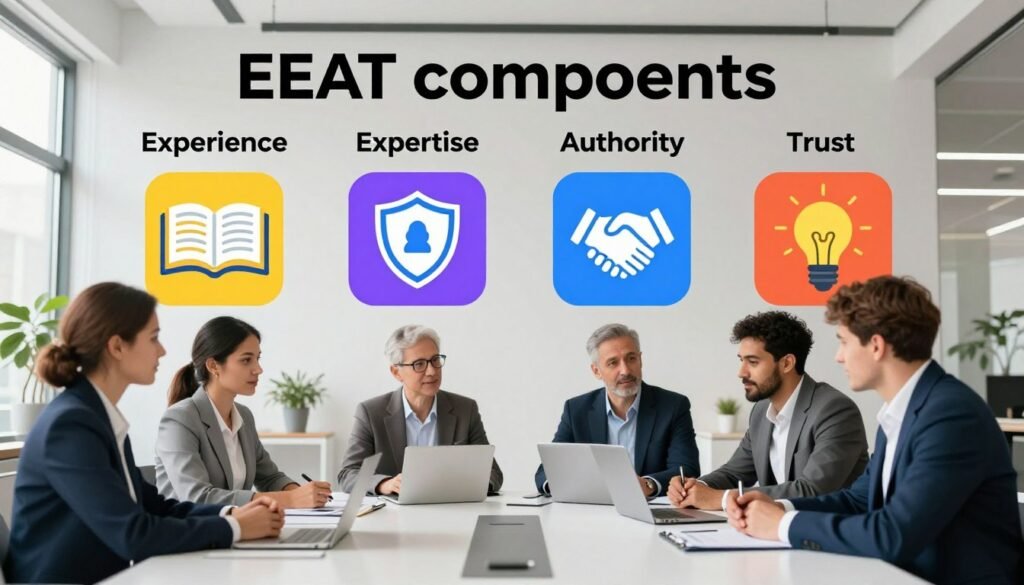
At knowCode, we know how important Experience, Expertise, Authority, and Trust (EEAT) are. By using sustainable engineering and green tech, businesses can boost their EEAT. This improves their online reputation.
Our team is here to help businesses grow their online presence. For more info on how we can help, call (404) 984-2226 or email business@knowcode.us.
Key Takeaways
Having a strong online presence is essential today.
EEAT is key to boosting online credibility.
Using sustainable engineering can improve a business’s EEAT.
Green tech innovation gives businesses a competitive edge.
Expert guidance can greatly enhance a business’s online presence.
Understanding EEAT: The Foundation of Quality Content
EEAT stands for Experience, Expertise, Authority, and Trust. It’s the core of quality content that connects with people. Let’s dive into what EEAT is and why it’s key in making great content.
The Evolution from E-A-T to EEAT
EEAT is a new step from the old E-A-T. It adds Experience to the mix. This change shows Google now values content quality and relevance even more.
Key Changes in Google's Quality Guidelines
Google’s rules have changed a lot with EEAT. The main updates are:
More focus on the creator’s experience
Better checks on content expertise
Deeper look at authority and credibility
Trustworthiness is now a big deal
Timeline of EEAT Implementation
EEAT has been introduced slowly, with big updates over the last year. For the latest, call us at (404) 984-2226 or email business@knowcode.us.
Breaking Down Each Component of EEAT
It’s important to know each part of EEAT for content that meets Google’s standards. These parts work together to make content believable.
How Each Element Contributes to Content Quality
Experience adds a real-world view. Expertise makes sure the content is right and deep. Authority shows you’re credible, and Trust keeps your audience coming back.
The Interconnection Between EEAT Components
EEAT’s parts are connected. For example, showing expertise boosts authority. Trust grows with steady, quality content.
The Critical Role of Experience in EEAT
EEAT highlights the importance of experience. It adds depth and insight to content, making it more valuable.
First-Hand Experience vs. Theoretical Knowledge
First-hand experience and theoretical knowledge differ. Theoretical knowledge lays the groundwork. First-hand experience brings practical insights that boost content quality.
Identifying Content That Demonstrates Real Experience
Content showing real experience is detailed and relevant. For example, talking about eco-friendly materials in building shows experience and helps readers.
Common Pitfalls When Claiming Experience
Exaggerating experience is a common mistake. It’s important to be truthful and specific about your experiences, using real examples.
How to Demonstrate Experience in Your Content
There are many ways to show experience in content. Practical examples, case studies, and detailed explanations of topics like climate change mitigation are effective.
Practical Examples and Case Studies
Real-life examples and case studies are powerful. A company that has used eco-friendly practices can share its story, including challenges and successes.
Formatting and Structural Elements That Highlight Experience
Using tables can make complex information easy to understand.
Experience Level
Content Characteristics
Example
Basic
General information, theoretical foundations
Overview of eco-friendly materials
Advanced
Specific examples, case studies, practical applications
Case study on implementing eco-friendly materials in construction
Expert
In-depth analysis, original research, innovative solutions
Research on new eco-friendly materials and their applications
For more tips on using experience in your content, call (404) 984-2226 or email business@knowcode.us.
Building and Showcasing Expertise for Better Rankings
Getting better rankings in search engines is all about showing you know your stuff. As we dive deeper into SEO, it’s clear that being seen as an expert is key. This boosts your website’s visibility.
What Constitutes Expertise in Google's Eyes
Google looks at a few things to see if you’re an expert. They check the quality of your content and who wrote it. Expertise in renewable energy integration or carbon footprint reduction means you really get the topic.
Formal Qualifications vs. Demonstrated Knowledge
Having formal qualifications helps, but it’s not everything. For example, someone with lots of experience writing about renewable energy can be seen as an expert. Even without official qualifications.
Industry-Specific Expertise Requirements
Every field has its own needs for being seen as an expert. In renewable energy, knowing the latest in solar panel efficiency or wind turbine design is important. To show you’re an expert in your field, try these:
Keep up with the latest news and trends
Share real examples or case studies
Offer deep analysis and insights
Practical Ways to Demonstrate Subject Matter Expertise
Here are some ways to show you’re an expert:
Author Bios and Credentials
Your author bio should highlight your skills and experience. For example, “John Doe is a top expert in renewable energy with over a decade of experience.”
Content Depth and Technical Accuracy
Your content should be detailed and accurate. To do this, you can:
Do thorough research on your topic
Give clear explanations and examples
Use the right technical terms and jargon
By using these tips, you can show your expertise and get more people to see your website. For more tips on improving your content, call us at (404) 984-2226 or email business@knowcode.us.
Establishing Authority in Your Industry
Building authority in your field is key to boosting your online presence and search rankings. Authority is vital for showing a brand or person is trustworthy online. By focusing on authority, businesses can improve their reputation and SEO.
The Difference Between Expertise and Authority
Expertise and authority are not the same, even though they’re often mixed up. Expertise means having a lot of knowledge or skill in a specific area. Authority, on the other hand, means being seen as a trusted leader in that field. To be seen as an authority, you need to show you’re an expert and have a track record of providing valuable insights or solutions.
Individual vs. Brand Authority
Authority can be built by individuals or brands. For example, a well-known expert in sustainable engineering can boost their brand’s credibility. Brands can also gain authority through innovation and customer satisfaction. Knowing the difference between individual and brand authority helps businesses create better strategies.
Authority Signals Google Looks For
Google looks at several things to determine authority. These include the quality of content, backlinks from trusted sources, and mentions in industry publications. By focusing on these areas, businesses can improve their authority and search rankings. For instance, being mentioned in a respected industry journal can greatly increase a brand’s authority.
Strategies for Building Online Authority
Building online authority takes a multi-faceted approach. It involves creating high-quality content, building links, and getting media mentions. By using these strategies, businesses can become leaders in their field.
Link Building and Citations
Link building and citations are key for authority. Getting backlinks from trusted sources and being cited in publications boosts online credibility. For example, a green technology company can gain from being mentioned in a leading environmental journal.
Media Mentions and Industry Recognition
Media mentions and industry recognition are also important for authority. Being featured in reputable media and winning industry awards shows expertise and commitment. For instance, a company with innovative sustainable solutions can benefit from being in a prominent publication.
Authority Building Strategies
Description
Benefits
Link Building
Obtaining backlinks from reputable sources
Improved online credibility, enhanced SEO
Citations
Being cited in industry publications
Increased authority, improved brand recognition
Media Mentions
Being featured in reputable media outlets
Enhanced credibility, increased brand visibility
For more information on building authority in your industry, contact us at (404) 984-2226 or email us at business@knowcode.us.
Why EEAT Matters More Than Ever in Today's Digital Landscape
AI-generated content has made EEAT more important than ever. In today’s digital world, finding trustworthy content is key. EEAT, which stands for Experience, Expertise, Authority, and Trust, is essential for this.
The Rise of AI Content and Misinformation
AI-generated content has increased, leading to more misinformation. This makes it hard for users to find reliable info online.
How EEAT Helps Combat Low-Quality AI Content
EEAT helps content creators make their work stand out. It ensures their content is of high quality and trustworthy. This helps fight against low-quality AI content.
Google's Helpful Content Update and EEAT
Google’s Helpful Content Update rewards content with strong EEAT signals. This update highlights EEAT’s importance in today’s digital world.
Google's Heightened Focus on Quality Signals
Google’s algorithm updates focus on quality signals. EEAT is a key part of these signals. It ensures users get the best and most trustworthy information.
Recent Algorithm Updates Emphasizing EEAT
Recent updates have made EEAT even more important. These updates show Google’s dedication to better search results.
Competitive Advantage Through Strong EEAT Signals
Showing strong EEAT signals gives content creators an edge. It improves search rankings and builds trust with the audience.
For more on using EEAT in your content strategy, call us at (404) 984-2226 or email business@knowcode.us.
Implementing EEAT Principles in Your Content Strategy
To use EEAT principles, we need to think carefully about our content. We should focus on experience, expertise, authority, and trust. This means we have to change how we plan our content.
Content Planning with EEAT in Mind
When planning content, we must think about EEAT. We should pick topics that our audience likes and show our knowledge.
Topic Selection Based on Experience and Expertise
It’s key to choose topics that match our experience and knowledge. For example, talking about eco-friendly materials in building shows our know-how. It also helps with climate change mitigation.
Creating Content Briefs That Emphasize EEAT
Our content briefs should highlight EEAT. They should outline our experience and knowledge. For instance, a brief on sustainable building could talk about our team’s green architecture experience.
Auditing Existing Content for EEAT Compliance
Checking our current content for EEAT is vital. We need to see if it shows the right experience, knowledge, authority, and trust.
Step-by-Step EEAT Content Audit Process
To audit EEAT, follow these steps:
Find key topics in your field, like climate change solutions.
Check if each piece of content shows our experience and knowledge.
Look at the authority shown through sources and author credentials.
See if the content is trustworthy, based on data and openness.
Prioritizing Content Updates Based on EEAT Gaps
After finding EEAT gaps, update content based on its importance. For example, updates on eco-friendly materials should reflect new research or trends.
Content Type
EEAT Focus
Update Priority
Blog Posts
Expertise, Authority
High
Product Descriptions
Experience, Trust
Medium
Research Articles
Authority, Trust
High
For more on using EEAT in your content strategy, call us at (404) 984-2226 or email business@knowcode.us.
EEAT for Different Types of Websites and Industries
Exploring the online world, we see EEAT’s importance across various websites and industries. The Experience, Expertise, Authority, and Trust principles are key. Yet, their use changes based on the website’s type and industry.
YMYL Sites: Meeting the Highest Standards
YMYL sites, like those in healthcare, finance, and law, face Google’s strictest scrutiny. These sites affect users’ lives greatly. So, their content must show top EEAT.
Healthcare and Financial Content Requirements
Health and finance content must show expertise with current, correct info. Authors should be experts, and content should get field reviews. For example, financial content should discuss renewable energy integration and its carbon footprint reduction effects.
Legal and Safety Information Best Practices
Legal and safety info needs high authority and trust. This is done by using credible sources, clear info, and regular updates.
E-commerce, Blogs, and Service Businesses: Industry-Specific Approaches
E-commerce, blogs, and service sites must follow EEAT but with their own twists. E-commerce sites should offer detailed product info and customer feedback to build trust.
Product Review EEAT Requirements
Product reviews should come from those with experience with the products. They should mention both good and bad points. This builds trust with buyers.
Service Business Credibility Signals
Service businesses need credibility signs like customer testimonials, case studies, and service descriptions. These show authority and expertise in their field.
Want to learn more about EEAT in your content strategy? Call (404) 984-2226 or email business@knowcode.us.
Measuring the Impact of EEAT on Your SEO Performance
As we explore SEO, it’s key to see how EEAT affects our work. We must track important metrics and use the right tools to understand this impact.
Key Metrics to Track
To see EEAT’s effect on SEO, we need to watch certain signs. These include changes in traffic, rankings, and how users interact with our site.
Traffic and Ranking Changes After EEAT Improvements
Changes in organic traffic and rankings show EEAT’s impact. By looking at these changes, we can see how EEAT boosts our SEO.
Engagement Metrics as EEAT Indicators
Engagement metrics like time on page and bounce rate tell us if our content hits the mark. When users engage more, it means our content is both relevant and trusted.
Tools for Monitoring EEAT-Related Ranking Changes
To track EEAT’s effect on SEO, we need the right tools. We can use both built-in analytics and third-party tools.
Analytics and Search Console Insights
Google Analytics and Search Console give us deep insights. They show us traffic, ranking changes, and user behavior. This helps us understand how EEAT boosts our SEO.
Third-Party Tools for EEAT Assessment
Third-party tools offer detailed views of EEAT’s impact. They help us spot areas for betterment and measure our EEAT strategy’s success.
For more on boosting your SEO with EEAT, call us at (404) 984-2226 or email business@knowcode.us.
Conclusion: Embracing EEAT as a Long-Term Strategy
EEAT is key to making online content better and more trustworthy. It stands for Experience, Expertise, Authority, and Trust. Businesses can boost their SEO and engage users more by using EEAT.
Using EEAT is not just a quick fix. It’s a long-term plan that needs ongoing work. As Google’s tech gets smarter, focusing on EEAT will help keep your content visible and trusted.
To make the most of EEAT, create content that shows your real experience and knowledge. Building your authority online is also vital. For tips on EEAT, consider talking to experts in energy-efficient design and technology.
Want to improve your content strategy with EEAT? Call us at (404) 984-2226 or email business@knowcode.us. By adopting EEAT, you’ll build a solid base for your online presence and future success.
FAQ
What is EEAT, and how does it differ from E-A-T?
EEAT stands for Experience, Expertise, Authority, and Trust. It builds on E-A-T by adding Experience. We think EEAT gives a better way to check content quality.
How does EEAT impact our content strategy?
Using EEAT in our content strategy helps us make better content. This content connects with our audience and boosts our online presence.
What are the key components of EEAT, and how do they contribute to content quality?
EEAT’s core parts are Experience, Expertise, Authority, and Trust. Each part is key to building trust with our audience. This makes our content better.
How can we demonstrate Experience in our content, and why is it important?
We show Experience by sharing our own stories, case studies, and examples. It’s important because it builds trust and credibility with our audience.
What constitutes Expertise in Google’s eyes, and how can we demonstrate it?
Google values formal education, proven knowledge, and specific industry skills. To show Expertise, we create detailed, accurate content and highlight our authors’ qualifications.
How can we establish Authority in our industry, and what signals does Google look for?
We gain Authority by making high-quality content and getting links from trusted sources. Google looks at link quality, brand mentions, and industry recognition to judge Authority.
How does EEAT help combat low-quality AI content and misinformation?
EEAT fights low-quality AI and misinformation by focusing on human Experience, Expertise, and Authority. This way, we promote reliable, high-quality content.
What are the benefits of implementing EEAT principles in our content strategy, and how can we measure its impact?
Using EEAT makes our content better, more credible, and more visible online. We track traffic, ranking changes, and engagement to see EEAT’s impact.
How does EEAT apply to different types of websites and industries, such as YMYL sites or e-commerce businesses?
EEAT works for all kinds of websites and industries, with YMYL sites needing the most. We adjust our EEAT strategy for each industry, like healthcare or finance.
What tools can we use to monitor EEAT-related ranking changes and assess our content’s EEAT compliance?
We use Google Analytics and Search Console to watch for EEAT ranking changes. We also use third-party tools to check our content’s EEAT and find ways to improve.