
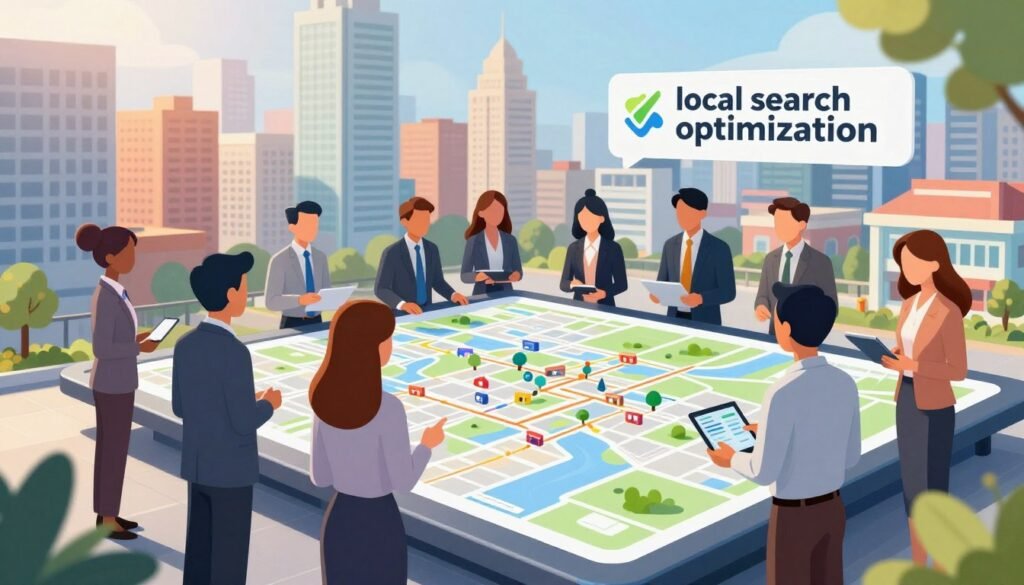
Did you know that nearly 76% of local mobile shoppers visit a store within a day of conducting a local search? This shows how vital local search optimization is for businesses wanting to draw in local customers.
To really connect with their local audience, businesses need a more focused strategy. That’s where hyper-local SEO comes in. It lets businesses tailor their content to attract local customers.
By using hyper-local SEO, businesses can get more people to see their online presence. This leads to more people visiting their stores and, in turn, more sales. For tips on boosting your hyper-local SEO, call us at (404) 984-2226 or email business@knowcode.us.
Key Takeaways
- Hyper-local SEO is key for drawing in local traffic.
- Local search optimization boosts a business’s online visibility.
- Micro-targeted content is essential for reaching the local crowd.
- Good hyper-local SEO strategies can increase store visits.
- Enhancing hyper-local SEO can also lead to higher sales.
The Evolution of Local Search and Why Hyper-Local Matters
Search behavior is changing, making hyper-local SEO more important. People now search for local businesses in specific neighborhoods.
From “Near Me” to Neighborhood-Specific Searches
Voice search and mobile devices have increased “near me” searches. But, people want businesses in certain neighborhoods. This means businesses need to use neighborhood seo and geo-targeted keywords.
- Target specific neighborhoods with tailored content
- Use neighborhood names in keywords and metadata
- Create content relevant to local events and issues
The Competitive Advantage of Micro-Market Targeting
Using geo-targeted seo can give businesses an edge. Micro-market targeting helps them stand out by meeting neighborhood needs.

- Identify and target specific micro-markets
- Develop content that resonates with local audiences
- Build local citations and backlinks from neighborhood businesses
For more on hyper-local SEO, call (404) 984-2226 or email business@knowcode.us.
What is Hyper-Local SEO?
Hyper-Local SEO is about targeting specific areas to attract local customers. It focuses on optimizing online presence for small locations. This helps capture searches from people nearby.
Defining the Micro-Geographic Approach
This approach tailors SEO strategies for small areas. It might target a neighborhood, a few streets, or a large building. This way, businesses can attract nearby customers who are more likely to visit.
Key aspects of this approach include:
- Identifying and targeting specific neighborhood boundaries
- Using location-based keywords that reflect local landmarks or areas
- Creating content that is relevant to the local community
How It Differs from Traditional Local SEO Strategies
Hyper-Local SEO is more detailed than traditional Local SEO. It targets smaller areas, not just cities. This helps businesses:
- Compete more effectively in crowded markets by targeting niche areas
- Provide highly relevant content and services to local customers
- Improve their visibility in local search results
For businesses wanting to use Hyper-Local SEO, getting help from experts is a good idea. You can call us at (404) 984-2226 or email us at business@knowcode.us for more information.
Mapping Your Hyper-Local Target Areas
Finding your hyper-local target areas is key to a good neighborhood SEO plan. Knowing the specific neighborhoods and micro-markets you serve helps you tailor your marketing. This way, you can connect better with local customers.
Identifying Neighborhood Boundaries and Micro-Markets
To target local searchers well, you must know the areas you serve. This means figuring out neighborhood boundaries and what makes each micro-market unique.
Using Google Maps to Define Service Areas
Google Maps is great for setting your service areas. It lets you see the neighborhoods you serve and make custom maps. These maps can show off your target areas.
Analyzing Foot Traffic Patterns
Knowing how people move around in your target neighborhoods is important. This info helps you make your marketing better. It helps you reach more people who might be interested in what you offer.
Competitor Analysis at the Neighborhood Level
Doing a competitor analysis at the neighborhood level is vital. It helps you see who you’re up against and what they do well. This way, you can find ways to stand out and be different.
| Neighborhood | Competitor Presence | Our Presence |
|---|---|---|
| Downtown | High | Medium |
| Suburbs | Medium | High |
| Rural Areas | Low | Low |
For more tips on boosting your local search presence, call us at (404) 984-2226 or email business@knowcode.us.
Conducting Neighborhood-Specific Keyword Research
In the world of hyper-local SEO, keyword research is key. It helps us target specific neighborhoods effectively. We must know the search terms and patterns local people use.
Finding Hyper-Local Search Terms
Finding the right keywords is not just about guessing. It’s about understanding the local culture, landmarks, and terms. This deep dive is necessary.
Neighborhood Name Variations and Colloquialisms
Local folks often use different names for neighborhoods. For example, “Downtown” might be called “City Center” or “Central Business District.” Using these variations in our keywords can attract more people.
Local Landmarks as Search Anchors
Landmarks like parks, monuments, or popular spots are great for search queries. People often look for things “near” these landmarks. By using these landmarks in our keywords, we can reach more people.
Tools and Techniques for Geo-Targeted Keyword Discovery
Several tools help with finding geo-targeted keywords. Google Keyword Planner is a must for finding relevant keywords. Using location-based filters can also narrow down our search to specific areas. Tools like Ahrefs and SEMrush help analyze competitors and find gaps in our strategy.
For businesses aiming to lead in their local market, thorough keyword research is vital. By using the right keywords, businesses can boost their local search visibility. This drives more targeted traffic to their sites. For more details, call (404) 984-2226 or email business@knowcode.us.
Creating Micro-Targeted Content That Converts
Creating content that speaks to local customers is key for businesses wanting to boost their hyper-local SEO. By making content specific to certain neighborhoods, businesses can show up more in local search results. This brings more targeted visitors to their websites.
Neighborhood-Specific Landing Pages
Neighborhood-specific landing pages are a great way to grab local search traffic. These pages let businesses target specific areas with content that really speaks to the local crowd.
Structure and Essential Elements
When making neighborhood-specific landing pages, include these key elements:
- Local Keywords: Use keywords that match the specific neighborhood or area.
- Unique Content: Make sure each page has its own unique content, not found on other pages.
- Local References: Add mentions of local landmarks, events, or businesses to make it more relevant.
Avoiding Duplicate Content Issues
To steer clear of duplicate content problems, businesses should:
- Use canonical URLs to point to the preferred page version.
- Make sure each landing page has its own, original content.
- Check their website regularly for any duplicate content.
Hyperlocal Blog Content Strategies
Hyperlocal blog content is a smart way to connect with local audiences and boost hyper-local SEO. By talking about local events and making neighborhood guides, businesses can draw in local readers and increase website traffic.
Local Event Coverage
Writing about local events is a smart move for timely and relevant content. Businesses should:
- Find out about upcoming events in the target neighborhood.
- Make event-specific content, like previews or reviews.
- Use event-related keywords to get more visibility in searches.
Neighborhood Guides and Resources
Making detailed guides to local neighborhoods can make a business seen as a local expert. These guides should include:
- Info on local attractions and businesses.
- Tips for both locals and visitors.
- References to other local resources.
For more on hyper-local SEO strategies or to talk about your specific needs, call (404) 984-2226 or email business@knowcode.us.
Optimizing Google Business Profile for Neighborhood Targeting
By fine-tuning your Google Business Profile for neighborhood targeting, you can boost your local search visibility. This means presenting your business in a way that appeals to local searchers. It’s all about making your profile more relevant and attractive.
Strategic Category and Attribute Selection
Choosing the right categories and attributes is key. It helps Google understand what you offer. This makes your profile more likely to appear in local searches. Choose categories that are specific to your business and relevant to your local audience.
| Category | Description | Benefit |
|---|---|---|
| Specific Service Category | Clearly defines the service you offer | Improves visibility in relevant searches |
| Local Business Category | Identifies your business as local | Enhances local search credibility |
Geo-Tagged Photos and Hyper-Local Posts
Geo-tagged photos and hyper-local posts make your profile more appealing to locals. Use photos that show your business’s local involvement or highlight your products and services.
Photo Naming Conventions for Local SEO
Use descriptive keywords in your photo names, including neighborhood names. For example, “Main-Street-Coffee-Shop-New-York.jpg” is more visible than “coffee-shop.jpg”.
Creating Neighborhood-Specific Updates
Post updates about your local involvement or special promotions. For example, “We’re proud to sponsor the local Little League team this season! #CommunityFirst” can build a positive image.
For more info on optimizing your Google Business Profile or to discuss your neighborhood targeting strategy, call (404) 984-2226 or email business@knowcode.us.
Building a Hyper-Local Backlink Strategy
A good hyper-local backlink strategy can help you beat your competitors in local searches. To do this, we must focus on getting backlinks from local sources that matter.
Neighborhood Business Partnerships
Working with local businesses is a smart way to get backlinks. We can team up on projects, support local events, or just link to each other. For example, we can start by calling (404) 984-2226 or emailing business@knowcode.us to find partners.
Community Organization Relationships
Connecting with local groups can also get us valuable backlinks. By joining or supporting local causes, we can get links from trusted sources. This boosts our backlink profile and helps the community too.
Local Sponsorships That Drive SEO Value
Backing local events or charities can boost our SEO by getting us quality backlinks. We should look for sponsorships that fit our business and audience.
Neighborhood Association Connections
Getting in touch with neighborhood associations can open up more backlink chances. By working with these groups, we can make connections that lead to important links from local authorities.
Implementing Technical SEO for Hyper-Local Search
To be top in local search, you need technical SEO. It’s about making your site easy for search engines to find and use. This improves how people see your business online.
LocalBusiness Schema Markup Optimization
Optimizing your LocalBusiness schema markup is key. It shows search engines your business’s name, address, and hours. This helps them understand your local presence better.
Service Area Specifications
It’s important to list your service areas in your schema markup. This tells search engines where you serve. It makes your business more visible in local searches.
Neighborhood-Specific Structured Data
Adding neighborhood-specific data boosts your local search. It tells search engines where you operate. This helps local customers find you more easily.
Mobile Optimization for Local Searchers
Most local searches happen on mobile. So, making your site mobile-friendly is essential. It keeps local customers happy and coming back.
Location Services Integration
Adding location services to your site helps users find you. It increases foot traffic and sales. It’s a big win for your business.
Page Speed for On-the-Go Searches
Page speed matters for quick searches. A slow site can lose customers. Improve speed by optimizing images and using browser caching.
For hyper-local success, technical SEO is a must. Focus on schema markup and mobile optimization. Need help? Call (404) 984-2226 or email business@knowcode.us.
Leveraging Social Media for Hyper-Local Engagement
Social media is a key tool in hyper-local SEO for building neighborhood connections. It’s vital to know how to use it to connect with our audience on a personal level.
To make the most of social media, we focus on two main strategies. These are neighborhood hashtag strategies and geo-targeted social advertising. Let’s dive into each.
Neighborhood Hashtag Strategies
Using neighborhood-specific hashtags can boost our social media presence in local markets. By finding and using the right hashtags, we can get more visibility and local engagement.
For example, a business in different neighborhoods can use unique hashtags for each area. This makes their content more relatable to local customers. It also helps with local SEO and builds a community around our brand.
| Hashtag Type | Example | Purpose |
|---|---|---|
| Neighborhood-specific | #DowntownArea | Targets local audience |
| Event-based | #SummerFest | Promotes local events |
| Community-driven | #SupportLocal | Fosters community engagement |
Geo-Targeted Social Advertising
Geo-targeted social ads help us reach people in specific areas. This ensures our message goes to those who are most likely to be interested. By targeting by location, we can spend our ad budget more wisely and get better results.
For instance, a local coffee shop can target ads to people within a 1-mile radius. They can promote their daily specials and increase foot traffic. This method works well for businesses with a strong local presence.
By using these social media strategies with our hyper-local SEO, we can boost engagement and success. For more details or to discuss your needs, call us at (404) 984-2226 or email business@knowcode.us.
Common Hyper-Local SEO Mistakes and How to Avoid Them
When you’re doing hyper-local SEO, it’s key to steer clear of common mistakes. These can block your local search optimization success. Knowing these errors helps businesses improve their location-based search strategy to reach their audience better.
Over-Optimization of Location Keywords
One big mistake in hyper-local SEO is using too many location keywords. It’s good to use location terms, but too much can get you penalized. Instead, make your content naturally include neighborhood names, local landmarks, and other geographic details.
Neglecting Consistent NAP Information
Another big error is ignoring consistent NAP (Name, Address, Phone Number) info online. If your NAP is not the same everywhere, search engines get confused. This weakens your online presence. Make sure your NAP is the same on all directories, citations, and your website. For more help or to talk about your hyper-local SEO plan, call (404) 984-2226 or email business@knowcode.us.
Measuring Your Hyper-Local SEO Success
Measuring success in hyper-local SEO needs a detailed approach. We focus on key metrics for the neighborhood level. To track our progress, we set up analytics for specific neighborhoods.
Setting Up Neighborhood-Specific Analytics
To see how our hyper-local SEO works, we need to set up our analytics tools. This means:
- Setting up geo-targeted filters in Google Analytics
- Creating custom dashboards for neighborhood-level performance
- Tracking key performance indicators (KPIs) such as organic traffic, conversions, and engagement metrics for each targeted neighborhood
Tracking Micro-Conversion Metrics
Micro-conversions show how well our hyper-local SEO works. By tracking these, we understand our campaign’s success better.
Phone Call Tracking by Service Area
Phone call tracking is a key metric. Call tracking software shows which neighborhoods call us most. This helps us target better and improve our ROI. For more on call tracking, call (404) 984-2226.
Direction Requests from Specific Neighborhoods
Tracking direction requests from specific neighborhoods is also important. Google My Business insights show which areas engage with us most. This helps us tailor our content and SEO strategies. For more on using direction requests, email business@knowcode.us.
By focusing on these metrics and optimizing our strategies, we can see big improvements in hyper-local SEO. It’s about knowing our local audience well and adapting to their needs.
Conclusion: Dominating Your Local Market Through Micro-Targeted Strategies
Hyper-local SEO is a key tool for businesses aiming to lead in their local market. It helps increase online visibility, attract more customers, and boost sales. We’ve seen how focusing on specific areas is vital for success.
To succeed in hyper-local SEO, start with detailed keyword research. Then, create content that speaks to your neighborhood. Don’t forget to optimize your Google Business Profile. These steps help you stand out and build a strong local presence. For more help, call us at (404) 984-2226 or email business@knowcode.us.
By using hyper-local SEO and local search optimization, you can grow your business. This approach leads to lasting success in your local market.
FAQ
What is Hyper-Local SEO, and how does it differ from traditional Local SEO?
Hyper-Local SEO focuses on small areas like neighborhoods. It’s different from Local SEO, which targets broader areas.
How do I identify the right neighborhoods to target for my business?
Use Google Maps to find service areas. Look at foot traffic to pick the best neighborhoods for your business.
What are some effective strategies for conducting neighborhood-specific keyword research?
Look for neighborhood names, local slang, and landmarks. Use tools for finding keywords specific to your area.
How can I optimize my Google Business Profile for neighborhood targeting?
Pick the right categories and use location-specific photos. Make posts for your neighborhood to boost your profile.
What are some common Hyper-Local SEO mistakes, and how can I avoid them?
Don’t overdo location keywords and keep your NAP info consistent. Use analytics for your area to track your success.
How can I measure the success of my Hyper-Local SEO efforts?
Use analytics for your area. Track calls and directions to see how well your strategy works.
What role does content play in a Hyper-Local SEO strategy?
Content tailored for your area is key. Make pages and blogs for your neighborhood to attract local customers.
How can I leverage social media for Hyper-Local engagement?
Use hashtags for your area and target ads locally. This helps you connect with people nearby and promote your business.
What is the importance of LocalBusiness schema markup in Hyper-Local SEO?
Schema markup helps your site show up in local searches. Make sure it includes your service area and neighborhood details.
How can I build a Hyper-Local backlink strategy?
Partner with local businesses and organizations. Use sponsorships to get links from your area.